Changing brake pads on your dirt bike falls under general maintenance and is a skill worth learning. It is easy once you know how and shouldn’t take you to long. On top of this you will save yourself money on getting a mechanic to do it.
I’ll give you a break down step by step as to what I do to change my pads. Your dirt bike may not be exactly the same but the principles are, so it should be good for any dirt bike. The pics here are taken of my Honda XR 250 and XLR 200, for reference.
Steps To Change Dirt Bike Brake Pads
- Remove pad pin plug
- Crack pad pin whilst caliper is still bolted
- Undo and remove caliper bolts
- Remove caliper from disc
- Remove pad pin
- Remove pads
- Install new pads by inserting them into position on the guide plate and resting them on the spring plate
- Insert the pad pin and screw enough to hold without tightening yet
- Whilst the caliper is off, check for sign of grooving on the disc. If grooved and or warped then replace.
- Mount the caliper back no the disc
- Insert caliper bolts and tighten to spec
- Tighten pad pin
- Replaced pad pin plug
Step 1 – Removing the pad pin plug
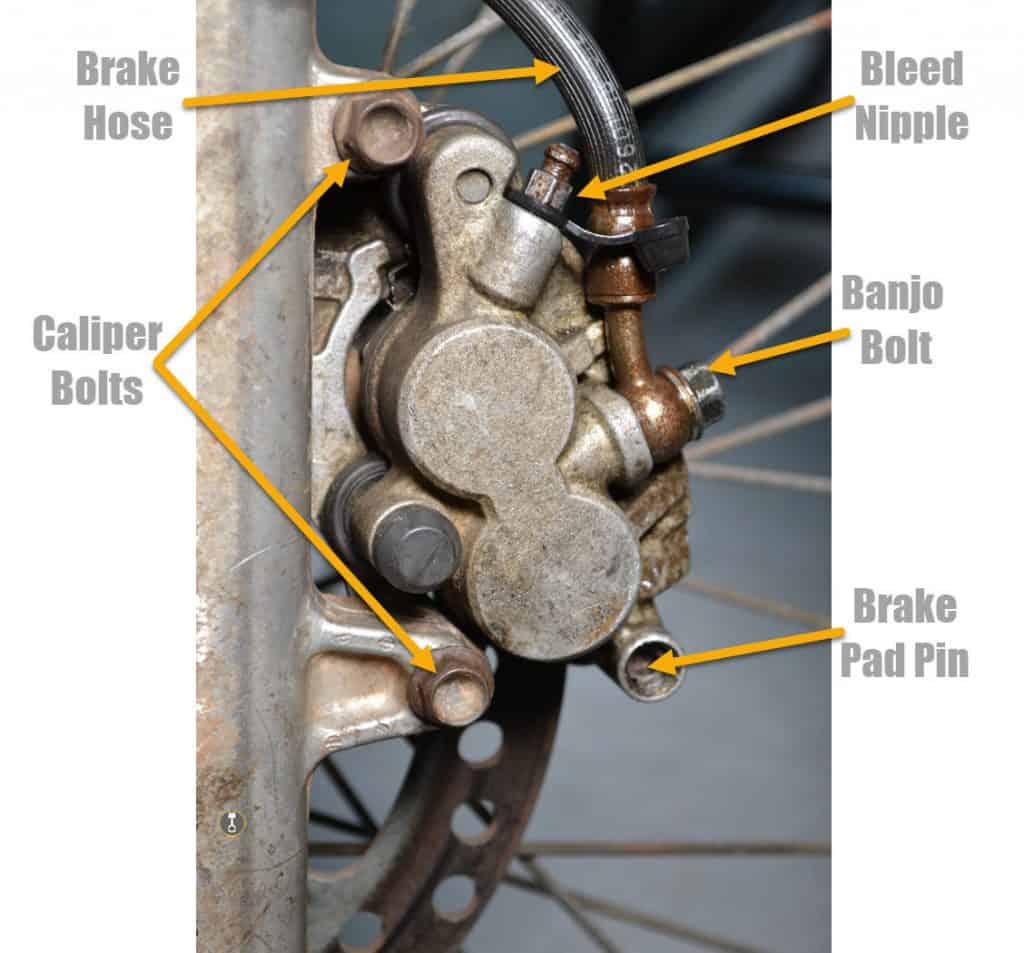
All bikes will likely have this plug over the pad pin screw which is there to protect the screw from mud and dirt. Not all of them have been present but they are all meant to have one. The pic above shows the pad pin and the plug isnt present but it is meant to have one.
If you haven’t done your pads for a while then this can be hard to crack open so just go careful. You don’t want to round this off.
Once cracked and undone it will expose the pin screw, The plug itself is not very thick.
Step 2 – Crack The Pad Pin But Don’t Take Out
This screw will probably be easy enough to undo but to make sure you crack it open whilst the caliper is still on the bike so you have something to lever against. Sometimes a squirt of WD40 is a good, especially if you don’t have a plug.
Step 3 & 4 – Undo Caliper Bolts & Remove The Caliper
Next up just undo the 2 bolts that hold the caliper in place. Once the caliper is free you can pull it off of the disc .
It will now just be attached by the brake hose.
Step 5 – Take Out The Pad Pin Screw
Now you can go back and remove the screw that is holding in the brake pads.

Step 6 – Take Out The Pads
The brake pads should now be free to be removed from the caliper. At this point I like to inspect the caliper, clean it if needed and also check the mount pins are greased.
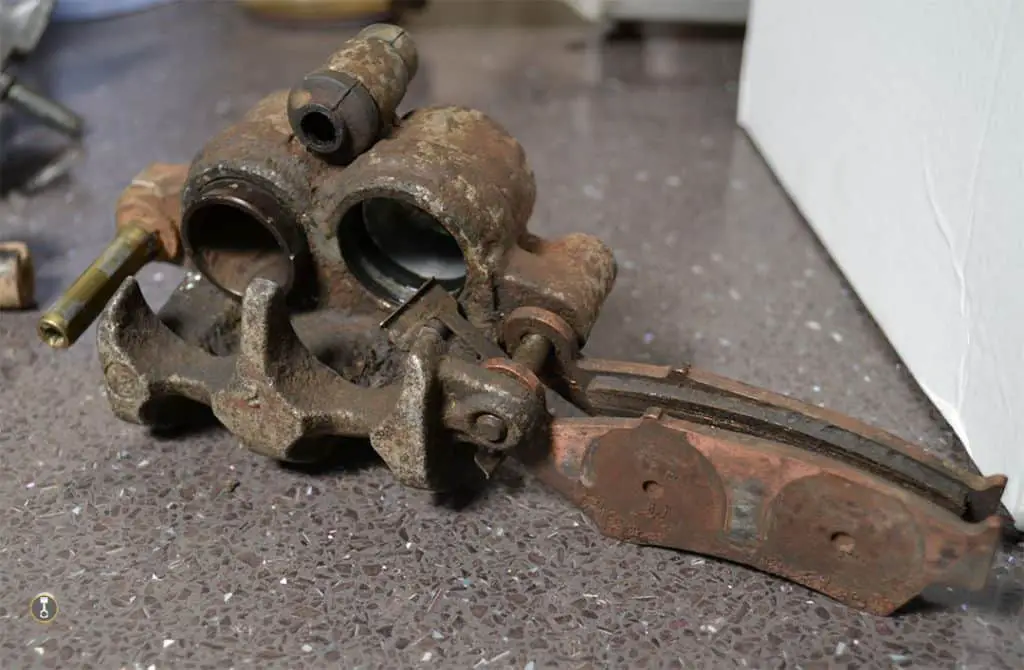
The pic above is from a newly aquired XLR200 and is filthy. The whole caliper is off from the bike as it is under going a good clean, then I’ll install seals, pistons and pads.
The mount pins should be sliding freely so you may as well give them a little love by cleaning and greasing them whilst the caliper is off to help prevent problems if they get stiff.
The other thing I like to eyeball is the springs the pads sit on. Just check they look ok and not damaged.

Step 7 & 8 – Installing New Pads and Pin
So this is just going to be the reverse of what we have just done.
Be sure that the pads are seated correctly on the guide plate at the back and sping plate at the end the pad pin goes.
When you are happy go ahead and push in the pin that holds the pad inplace. Do up enough to hold them without yet tighetening.
Step 9 – Check Your Disc
This wont need changing everytime of course but you need to check everytime you change the pads.
You are looking for signs of wear and this will include grooving where the pads have worn a groove into the disc, normally at the edge, and bowing or distortion of the disc.
Be prepared to change the disc if needed.
Step 10 & 11 – Remount The Caliper
Hold the caliper and slide it on so the disc goes inbetween the new pads.
Line it up and replace the caliper bolts and tighten. If you have a torque wrench then tighten to the correct spec.
As I reassemble the caliper I clean any bolts and regrease using copper grease where needed.
Step 12 & 13 – Pad Pin & Plug
Go back to the pad pin and tighten to spec with a torque wrench if you have one. If not be careful not to over tighten.
Then add in the pin plug. Again don’t over tighten.
It’s worth mentioning that with all of these bolts, I like to clean them up and when reinstalling I give them some grease. Doing things like this will make it easier next time round and is good practice.
How Often Do Brake Pads Need Changing?
The frequency required to replace your pads is going to differ based on various obvious factors, like the amount of usage and riding style etc.
There is no hard and fast rule, it is simply upto you to recognise when the pads are getting low and replace them before they become to worn. It’s in your interest as the rider because you will want to ability to stop!
Leaving pads to run to low will also cause more damage to other components like the discs and calipers.
Other Brake Related Maintenance
You can check back on my Dirt Bike Maintenance Hub for other articles I have written, but you will likely be interested in Brake Bleeding and Chaning Your Discs.